
Entry Barred: Australia Issues Exclusion Order as Damascus Standoff Leaves 34 in Syrian Limbo
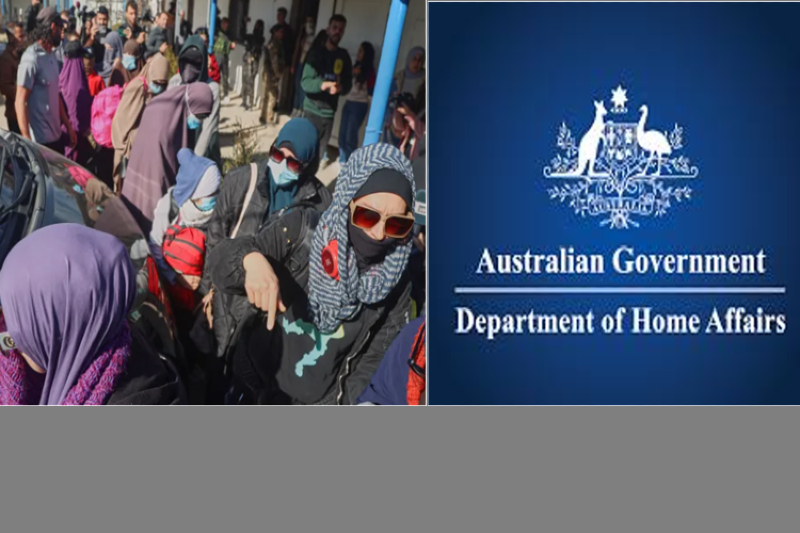
In a move highlighting the ongoing national security challenges in the Middle East, the Australian government has issued a Temporary Exclusion Order (TEO) against an Australian citizen attempting to return from a detention camp in northern Syria.
The decision, confirmed on Wednesday by Home Affairs Minister Tony Burke, follows an attempt by a group of 34 Australian women and children to leave the Al-Roj camp. While the group managed to depart the facility briefly on Monday, they were subsequently turned back by Syrian authorities due to "procedural and technical issues" before reaching the capital, Damascus.
While the group attempting to return consists of 34 Australian women and children, Home Affairs Minister Tony Burke confirmed on Wednesday that only one individual in that group has been issued a Temporary Exclusion Order (TEO).
Breakdown of the 34 Australians
| Category | Number | Status |
|---|---|---|
| Banned (TEO Issued) | 1 | Legally barred from entering Australia for up to 2 years. |
| Not Banned | 33 | Do not currently meet the legal "risk threshold" for a ban. |
| Total in Group | 34 | Currently turned back to the Al-Roj camp due to procedural issues. |
Key Developments in the Return Attempt
The Ban: Acting on advice from security agencies, Minister Burke issued the TEO against one adult in the group. This order can legally prevent an Australian citizen from entering the country for up to two years.
The Cohort: The group consists of 11 women and 23 children. Security agencies assessed that the other 33 individuals do not currently meet the legal threshold required for an exclusion order.
Government Stance: Prime Minister Anthony Albanese has maintained a "no repatriation" policy, stating that the government will provide no logistical or financial assistance to facilitate their return.
Allegations and Legal Context
The individuals held at the Al-Roj camp are largely the wives, widows, and children of fighters who joined the Islamic State (IS) during the height of the conflict in Syria and Iraq.
Allegations against the group include:
Ideological Alignment: The Prime Minister stated that these individuals "chose to go overseas to align themselves with a brutal, reactionary ideology" aimed at undermining Australian way of life.
Terrorist Support: Critics and security agencies allege that the adults in the group traveled to "declared areas" to support a listed terrorist organization.
Ongoing Security Risks: Opposition figures have raised concerns about the risk of radicalization, questioning how only one individual could be deemed a threat while others from the same environment are not.
Comparison of Global Repatriation Approaches
While Australia remains firm on its "no assistance" policy, other nations have adopted varying strategies for their citizens in Syrian camps.
| Country | Repatriation Policy | Recent Actions |
|---|---|---|
| Australia | No government assistance; case-by-case security bans. | Issued 1 TEO; refused aid for the current group of 34. |
| United Kingdom | Selective; often involves revoking citizenship (e.g., Shamima Begum). | Generally refuses to repatriate adults; limited help for orphans. |
| France/Netherlands | Shifted from refusal to active repatriations. | Several large-scale operations to bring back women and children. |
| United States | Advocates for full repatriation of all foreign nationals. | Regularly repatriates its own citizens to face trial domestically. |
The Humanitarian and Legal Limbo
The director of the Al-Roj camp, Hakmiyeh Ibrahim, has renewed calls for foreign governments to take back their citizens, warning that children are being raised in "dangerous" conditions surrounded by extremist ideologies.
Legal experts in Australia have noted that while the government can issue exclusion orders, it has a constitutional and international obligation to allow citizens with valid passports to return if they reach the border. The Prime Minister, however, has signaled that those who return independently will be subject to the full force of Australian law.
Timeline: Australian Repatriations from Syria
While the current government is taking a "no assistance" stance, there have been rare instances where the Australian government intervened to bring citizens home.
June 2019: The first successful mission occurred under the Morrison Government. Eight orphaned children, including children and grandchildren of slain IS fighter Khaled Sharrouf, were rescued from a camp and brought to Australia.
October 2022: In a high-profile operation, the Albanese Government repatriated four women and 13 children from the Al-Roj camp. The government justified this by stating that the group was the "most vulnerable" and that a managed return was safer for national security than an unmanaged one.
2023–2024: Small groups and individuals have reportedly "self-repatriated" by escaping camps and reaching Australian embassies in neighboring countries (like Lebanon or Turkey) to obtain travel documents.
February 2026: A group of 34 women and children (11 families) attempted to return independently. They reached Damascus but were forced back to the Al-Roj camp by Syrian authorities.
How Temporary Exclusion Orders (TEOs) Work
The Counter-Terrorism (Temporary Exclusion Orders) Act 2019 provides the Home Affairs Minister with a "gatekeeping" power to manage the return of citizens who may pose a threat.
| Feature | Details |
|---|---|
| Duration | An order can ban a person from entering Australia for up to two years. |
| Age Limit | Can be applied to any citizen aged 14 or older. |
| The Threshold | The Minister must "suspect on reasonable grounds" that the order assists in preventing a terrorist act or that the person is a risk to security due to politically motivated violence. |
| The Permit | A person under a TEO can still apply for a Return Permit. The government must eventually grant this, but can attach strict conditions (e.g., specific flight times, reporting to police, or curfews upon arrival). |
| Legal Penalty | Attempting to enter Australia while a TEO is active (without a permit) carries a prison sentence of up to two years. |
Managed vs. Unmanaged Returns: The Risk Debate
The core of the political argument in Australia rests on how these individuals should arrive:
The "No Repatriation" Argument: * Public Safety: Bringing people back consumes significant police and intelligence resources.
Moral Hazard: As the PM stated ("You make your bed, you lie in it"), the government argues it should not spend taxpayer money to rescue those who joined a terrorist cause.
The "Declared Area" Law: Under Section 119.2 of the Criminal Code, it is an offense (punishable by 10 years in prison) to have entered "declared areas" like Al-Raqqa between 2014 and 2017 without a valid reason.
The "Managed Return" Argument:
Surveillance: If the government brings them back, they can be arrested at the airport, monitored immediately, and placed into deradicalization programs.
The Risk of Limbo: Legal experts argue that leaving citizens in camps makes them harder to track; if they escape and return via "backdoor" routes, they could enter Australia undetected.
Children's Rights: Rights groups argue the 23 children in the current group are innocent victims who are effectively being punished for their parents' actions.
Mariam Raad, 32, was the most high-profile individual from the 2022 group to face the courts. Her case is often cited by both sides of the repatriation debate.
The Charges: Shortly after returning to regional New South Wales, she was arrested and charged with entering and remaining in a "declared area" (specifically Raqqa, Syria) between 2014 and 2017.
Under Australian law, this carries a maximum penalty of 10 years in prison. The Allegations: Prosecutors alleged she willingly traveled to Syria to join her husband, Muhammad Zahab, a former Sydney math teacher who became a high-ranking IS recruiter.
The Outcome (June 2024): Raad pleaded guilty.
However, the magistrate ultimately released her without a conviction, instead placing her on a 25-month good behavior bond. The Reasoning: The court noted a "wealth of evidence" regarding her efforts to reintegrate and her low risk to the community.
Her sentence included mandatory psychological counseling and continued engagement with deradicalization programs. Other 2022 Returnees (e.g., Mariam Dabboussy)
While Mariam Raad faced criminal charges, others in the group have had different experiences:
Community Resettlement: Several women, including Mariam Dabboussy, have resettled in the community without facing active criminal prosecution to date.
Ongoing Monitoring: Although not all were charged, they remain under "Operation Howth," a long-term multi-agency monitoring program designed to ensure community safety.
Control Orders: In some instances, the government uses Control Orders—civil orders that don't require a criminal conviction but can limit a person's movement, who they talk to, and their use of technology.
Recent Legal Precedent (2024–2025)
Two significant legal developments have shaped the current government's "no assistance" stance:
Save the Children Court Loss (2024): The charity Save the Children Australia sued the government to force the repatriation of the remaining citizens.
The Federal Court ruled in favor of the government, deciding that while Australia could bring them back, it has no legal obligation to do so because it does not have "effective control" over the Syrian camps. Self-Repatriation (October 2025): Two women and four children successfully smuggled themselves out of the Al-Hol camp to Lebanon.
Once they reached the Australian embassy there, the government issued them passports (as required by law for citizens) but provided no further aid. They returned on commercial flights and were met by the Australian Federal Police (AFP) for questioning upon arrival. Summary of Legal Status
Status Legal Outcome If Evidence of Crimes Exists Arrest and prosecution (up to 10 years jail). If Evidence is Insufficient Monitoring via Control Orders or Good Behavior Bonds. The "Declared Area" Rule Simply being in Raqqa/Mosul during the IS reign is a crime, unless a "legitimate purpose" (like humanitarian aid) can be proven. To understand why the Australian government is taking such a hard line, it is essential to look at the "Declared Area" laws (Section 119.2 of the Criminal Code).
These laws were specifically designed to make it easier to prosecute people returning from conflict zones, where gathering traditional evidence of "fighting" or "terrorism" is nearly impossible.
What is a "Declared Area"?
A "Declared Area" is a specific region (such as a city or province) where the Minister for Foreign Affairs is satisfied that a listed terrorist organization (like IS) is engaging in hostile activity.
The "Blanket" Crime: Under these laws, simply entering or remaining in a declared area is a crime punishable by up to 10 years in prison.
Historical Context: Both Al-Raqqa (Syria) and Mosul (Iraq) were declared areas during the height of the IS caliphate. While those specific declarations have since expired, the law still applies to anyone who was there while the declaration was active.
The "Legitimate Purpose" Test
If a person is charged with being in a declared area, the law places the "evidential burden" on the individual to prove they were there for a valid reason. However, the list of "legitimate purposes" is extremely narrow.
Legitimate Purpose Description Humanitarian Aid Providing genuine aid (e.g., working for a recognized NGO). Journalism Working in a professional capacity as a journalist or assisting one. Family Visits Making a bona fide visit to a family member (though "family" is strictly defined). Official Duty Working for the UN, Red Cross, or an Australian/Foreign government. Legal Obligations Appearing before a court or tribunal. What is NOT a Legitimate Purpose?
The law explicitly excludes several reasons that might otherwise seem plausible:
Religious reasons or pilgrimages.
Visiting friends (only close family counts).
Business transactions or commercial interests.
Accompanying a spouse who is engaging in hostile activity.
Why this matters for the current group
The 11 women currently in the Al-Roj camp face a significant legal hurdle if they return:
The "Solely" Requirement: To use a defense, a person must prove they were in the area solely for a legitimate purpose. If they visited a family member but also attended an IS-run school or training camp, the defense can fail.
The "ISIS Bride" Defense: Many women in these camps argue they were "trapped" or "forced" to follow their husbands. While Australian courts (like in the case of Mariam Raad) may show leniency if they can prove they were coerced, the "Declared Area" law itself does not automatically accept "following a spouse" as a legitimate purpose for being there.
The Latest Update (2026)
As of February 18, 2026, the Syrian government has announced plans to close both Al-Hol and Al-Roj camps. This is creating an urgent "push" factor, as thousands of foreigners—including the 34 Australians—may soon have no facility to house them, potentially forcing a resolution to this long-standing legal and humanitarian standoff.
The current situation in northeastern Syria is undergoing a massive shift that directly explains why these 34 Australians are suddenly on the move. As of February 18, 2026, the security architecture that has held for seven years is rapidly dissolving.1. The January 30 "Integration Deal"
Following a major Syrian government offensive, the Kurdish-led Syrian Democratic Forces (SDF) reached a comprehensive agreement with the Syrian Transitional Government (STG) in Damascus on January 30, 2026.
The Terms: The SDF is effectively being integrated into the Syrian national army and interior ministry. Control of oil fields, border crossings, and—crucially—detention camps is being handed over to Damascus.
The Result: The "security buffer" previously provided by Kurdish forces is gone. The Syrian government is now the primary authority responsible for the Australians in the camps.
2. The Closure of Al-Hol and the "Escape Crisis"
The larger and more notorious Al-Hol camp is already being emptied.
Mass Escapes: Between January 20 and February 16, reports indicate that over 10,000 residents escaped Al-Hol during the chaotic transition between Kurdish and Syrian government control.
Relocation: The remaining residents are being moved by the Syrian government to a new, smaller facility in Akhtarin (northern Aleppo province).
Regional Transfers: Approximately 5,700 high-risk IS detainees have been transferred to Iraq by the US military to prevent them from falling into Syrian government hands or escaping during the transition.
3. Current Status of Al-Roj Camp
The Al-Roj camp, where the Australians are held, is smaller and currently remains more stable than Al-Hol, but its future is just as uncertain.
The "Technical" Turn-Back: The 34 Australians who tried to leave on Monday were turned back not by the Kurds, but by the Syrian government authorities in Damascus. This indicates that Damascus is now exercising "veto power" over who leaves the country.
Why they were released: Kurdish officials at Al-Roj appear to be speeding up the release of foreign nationals to avoid being "left holding the problem" as Syrian government forces fully surround the area.
Heightened Risk: Security experts warn that the transition period is the most dangerous time for these families. With US forces completing their withdrawal from bases like Al-Shaddadi (as of February 15), there is no Western presence left to monitor the safety or treatment of the Australians.
Summary of the "New Reality" (February 2026)
Factor Previous Status (SDF Control) Current Status (Damascus Transition) Camp Authority Kurdish SDF (backed by US) Syrian Ministry of Interior Exit Strategy Managed repatriation via US/SDF Must be negotiated with Damascus Risk of Escape Low to moderate High (over 10,000 escaped recently) US Presence Active support and monitoring Withdrawal nearly complete The Australian government's refusal to help is now occurring in a vacuum where there are no longer any Western "partners" on the ground to guarantee these families don't disappear into the Syrian prison system or get caught in the crossfire of the transition.
The move to relocate residents to the Akhtarin camp in northern Aleppo marks a dramatic and risky new chapter for the Australians remaining in Syria. As of February 2026, the transition of power from Kurdish forces to the Syrian central government has turned the detention system into a "strategy of chaos."
1. Why Akhtarin?
The Syrian government has declared that the original Al-Hol and Al-Roj camps "lack the basic conditions for habitation." While this sounds like a humanitarian gesture, security analysts suggest the relocation is a strategic move to:
Consolidate Control: Move detainees away from the volatile Iraqi border and into territory more easily managed by the Syrian Interior Ministry.
Screen Detainees: The Syrian government plans to "evaluate" every resident. For the Australians, this means being processed by Syrian intelligence rather than Kurdish partners, which carries a much higher risk of indefinite detention or disappearance into the Syrian prison system.
2. Living Conditions in Akhtarin (February 2026)
Reports from the UN and NGOs describe the new facility in Akhtarin as a "bare-bones" site struggling with a massive influx of people.
Winter Crisis: The region is currently being hit by major snowstorms. Like much of Aleppo, the camp suffers from severe fuel shortages, meaning heating is non-existent.
Infrastructure: Unlike the established (though flawed) Al-Roj camp, Akhtarin is described as having "critical" sanitation needs. Many residents are living in tents with standardized flooring (canvas rolls) provided by the UNHCR to prevent freezing from the wet ground.
Health Risks: With over a million people in the broader Aleppo/Al-Hasakeh region lacking steady power or safe water, there is a significant risk of waterborne diseases.
3. The Security Vacuum
The most alarming aspect for the 34 Australians is the breakdown of security during this relocation:
The "Mass Escape" Factor: Over 10,000 people have already escaped the camps during the transition. While some women may see this as a chance for freedom, it often leads them into the hands of human traffickers or IS sleeper cells in the Syrian desert.
Sympathetic Guards: There are reports that some Syrian government fighters are facilitating escapes out of sympathy or for bribes, further destabilizing the managed return of foreign nationals.
The "Limbo" of Foreigners: While Iraq has agreed to take back its citizens, the "foreigners' annex" (where Australians are held) is emptying rapidly. Those who aren't repatriated now face a high risk of being "lost" in the relocation process.
Summary: The Risks for Australians in February 2026
Risk Factor Current Situation Legal Transfer to Syrian government control may lead to charges under Syrian law, complicating Australian consular access. Environmental Sub-zero temperatures and snow with no heating or adequate shelter in Aleppo. Security High likelihood of being caught in "mass riots" or fires designed to create chaos during the camp's closure. The Australian government’s refusal to assist comes at the exact moment the "safety net" of the Kurdish-run camps has officially collapsed.
The legal and humanitarian landscape for these 34 Australians has shifted from "static" to "critical" in the last few weeks. As of February 18, 2026, international organizations are launching a fresh wave of legal and diplomatic pressure on the Australian government.
1. New Legal Challenges and Human Rights Scrutiny
While the government successfully defended a major lawsuit in 2024, the deteriorating situation has triggered new actions:
The UN Universal Periodic Review (January 2026): Australia’s human rights record was reviewed by the UN in late January. Over 120 countries called on the Albanese government to better protect children and refugees. The UN specifically highlighted concerns about the "indefinite detention" of citizens in Syria without charge, which they labeled as a breach of international law.
Save the Children's "Moral Obligation" Push: Following the failed departure on Monday, Save the Children Australia has renewed its public campaign. They argue that while the 2024 Federal Court ruling stated there was no legal obligation to repatriate, the life-threatening conditions—including frostbite and malnutrition—create a non-negotiable moral and humanitarian duty.
The "Ticking Time Bomb" Argument: Security experts and human rights lawyers (including Australian Lawyers for Human Rights) are now arguing that the government’s refusal is counter-productive. They claim that leaving children to grow up in radicalized, lawless camps creates a greater long-term threat to Australia than a managed, supervised return.
2. The Damascus Factor: A New Legal Hurdle
The involvement of the Syrian government (Damascus) has changed the legal game.
State Responsibility: Human rights groups are now exploring whether the Australian government’s alleged role in "preparing passports and travel paperwork" (as reported by the camp director) created a "legitimate expectation" of return. If the government helped facilitate the release but then failed to coordinate with Damascus, lawyers argue it has directly contributed to the current "limbo."
Consular Access: Organizations like Human Rights Watch are demanding that Australia provide consular support now that the citizens are effectively under the jurisdiction of the Syrian Ministry of Interior, rather than the Kurdish SDF.
3. Domestic Political Pressure
The debate inside Australia has been reignited by two major factors:
The "You Made Your Bed" Policy: Prime Minister Albanese remains firm on his "no support" stance, which is popular in several electorally critical marginal seats in Western Sydney where security concerns are high.
The "Bondi Terror" Context: Following a terror attack at a Jewish festival at Bondi Beach on December 14, 2025, the opposition (led by Angus Taylor) has called for even stricter measures, including a blanket ban on anyone with IS associations.
Comparison of Arguments (February 2026)
The Government’s Position The Rights Groups’ Position National Security: Returnees pose an unmanaged risk to the community. National Security: Monitoring them in Australia is safer than leaving them to escape or be further radicalized. Personal Responsibility: Adults chose to join a brutal ideology; the government is not a rescue service. Rights of the Child: 23 children are innocent victims of their parents' choices and are facing life-threatening cold. Legal Precedent: Courts have ruled the government is not required to repatriate from foreign conflict zones. International Law: Indefinite detention without trial is unlawful, and the state must provide a pathway home for citizens. The situation is now a race against time as the Syrian government continues to empty the old camps and relocate residents to Akhtarin.
The question of why Australian citizens left a stable, democratic country to join a brutal conflict in Syria is a central part of this ongoing national debate.
While almost all of the 34 individuals currently in the camp are Australian citizens (or the children of citizens), their reasons for leaving between 2014 and 2017 were complex.
1. The "Pull" of the Caliphate
When IS declared a "caliphate" in June 2014, they launched a sophisticated, multi-lingual social media campaign.
The "Hero" Narrative: Recruiters targeted young men with promises of empowerment, status, and the chance to go from "zero to hero" by fighting for a cause.
The "Utopian" Promise: For women, the propaganda often showed "idyllic" scenes of domestic life, promising a pure Islamic society where they could raise families away from Western "corruption."
Religious Obligation: Many were convinced by extremist preachers that it was their religious duty (hijrah) to migrate to the newly declared Islamic territory.
2. Family and Marital Ties
A significant number of the women currently in the camps did not go to Syria as independent fighters.
Following Husbands: Many traveled to support their husbands who had decided to join IS. In some legal cases (like that of Mariam Dabboussy), families argue the women were tricked or coerced into traveling under the guise of a holiday in Turkey before being forced across the border.
Parental Decisions: Some of the current adults in the camps were actually children (teenagers) when their parents moved the entire family to Syria.
These individuals argue they had no choice in the matter. 3. "Push" Factors and Marginalization
Sociologists who study Australian radicalization point to several "push" factors that made IS propaganda more effective:
Identity Crisis: Some young Australian Muslims reported feeling like "outsiders" in their own country, facing a "glass ceiling" or social exclusion.
The "9/11 Generation" Effect: Growing up in an environment of heightened geopolitical tension left some feeling angry or humiliated on behalf of the global Muslim community (umma), making the IS narrative of "fighting back" attractive.
4. Recruitment Networks in Australia
Recruitment wasn't just online; it happened in local communities.
"Jihadi Influencers": Figures like Muhammad Zahab (a former Sydney teacher) were instrumental in recruiting dozens of family members and friends, creating a "cluster" effect where entire groups of acquaintances traveled together.
Summary of the Groups
Group Primary Motivation Current Status The "Idealists" Believed in the IS mission to build a new state. Mostly deceased or in high-security prisons. The "ISIS Brides" Followed husbands; sought a "traditional" religious life. Making up the majority of the 34 in Al-Roj camp. The Children Taken to Syria by parents or born there. 23 of the 34 currently stranded; they had no choice in going. The Government's Response to "Why"
Prime Minister Albanese’s "You make your bed, you lie in it" comment directly addresses these motivations.
The government's view is that regardless of the "pull" factors, these citizens made a conscious choice to align with an ideology that sought to destroy the Australian way of life.