
Beijing Blocks Meta’s $2 Billion Bid for AI Start-up Manus
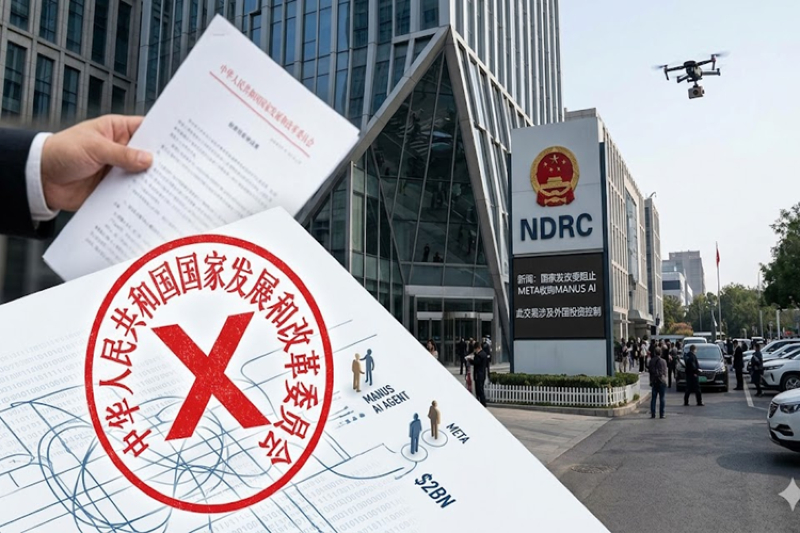
BEIJING / SINGAPORE — Chinese regulators have officially halted Meta’s acquisition of the artificial intelligence start-up Manus, citing strict foreign investment controls. The deal, valued at approximately $2 billion, was intended to integrate Manus’ autonomous AI agents into Meta’s global platforms, including Facebook and Instagram.
The decision was handed down by China’s National Development and Reform Commission (NDRC) on Monday. The commission prohibited the transaction and issued a formal requirement for all involved parties to withdraw the acquisition.
The Power of "Autonomous" AI
Manus, currently headquartered in Singapore, gained significant attention in the tech world for its "truly autonomous" AI agents. Unlike standard chatbots that require constant prompting, Manus claims its technology can independently plan and execute complex tasks based on a single instruction.
Meta CEO Mark Zuckerberg had previously signaled that the acquisition was a "natural fit" for the company’s pivot toward advanced AI, even as the firm slashed thousands of jobs to offset increased spending in the sector.
Regulatory Tug-of-War
Although Manus moved its operations to Singapore, the company was founded in China, making it subject to Beijing’s stringent technology export laws. These regulations are similar to those that complicated the sale of TikTok’s U.S. operations in recent years.
The block follows months of escalating tension:
Travel Restrictions: In March, reports surfaced that Manus' two co-founders were prevented from leaving China while the acquisition was under review.
Integration Issues: A Meta spokesperson previously stated that the Manus team was already "deeply integrated" into Meta’s operations. Forcing an "unwinding" of this merger could present massive technical and legal hurdles for the social media giant.
Rising Tech Tensions
The NDRC’s move comes amid a deepening divide between Washington and Beijing over the future of artificial intelligence.
Just last week, the White House announced closer collaboration with U.S. tech firms to defend against what it described as "industrial-scale" theft of AI advances by foreign entities, specifically pointing toward China. In response, China’s embassy in Washington criticized the "unjustified suppression" of Chinese companies, asserting that China has evolved into a "world innovation lab."
A spokesperson for Meta stated that the transaction "complied fully with applicable law" and expressed hope for an "appropriate resolution" to the inquiry. However, with Beijing’s firm stance, the future of the $2 billion deal remains highly uncertain.