
War Secretary Hegseth Forces Immediate Retirement of Army Chief of Staff
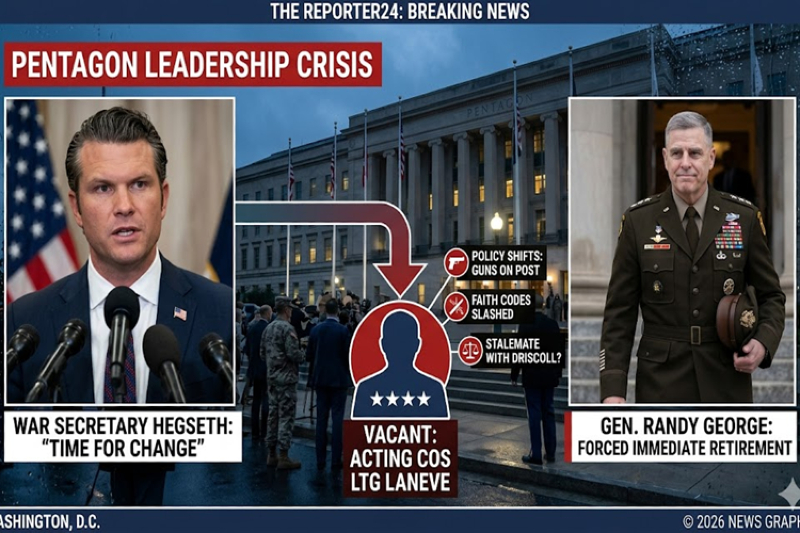
WASHINGTON, D.C. – In a move that has sent shockwaves through the American defense establishment, War Secretary Pete Hegseth has abruptly ordered the immediate retirement of Gen. Randy George, the 41st Chief of Staff of the Army.
The forced departure, announced Thursday, April 2, 2026, marks the most significant upheaval in military leadership since the United States entered active combat operations against Iran earlier this year.
A Sudden Exit Amidst Conflict
The removal of Gen. George, a highly decorated career infantry officer with extensive combat experience in Iraq and Afghanistan, was handled with clinical brevity.
According to senior War Department officials, Hegseth personally called the General to demand his resignation, stating simply that it was "time for a leadership change."
Chief spokesperson Sean Parnell confirmed the news via social media, expressing gratitude for George’s decades of service while providing no specific justification for the sudden dismissal.
Gen. George, who was confirmed by the Senate in 2023, was originally expected to serve as the Army's top uniformed officer through 2027.
Gen. Christopher LaNeve, the Army’s current Vice Chief of Staff, has been tapped to serve as the Acting Chief of Staff effective immediately.
Internal Power Struggles: Hegseth vs. Driscoll
The ousting of Gen. George is widely viewed by Pentagon insiders as the climax of an intensifying power struggle between Secretary Hegseth and Army Secretary Dan Driscoll. Tensions between the two civilian leaders have reportedly reached a breaking point over the management of officer promotions and institutional "meritocracy."
Sources indicate that Hegseth recently took the "unusual step" of personally intervening to strike several names from a senior officer promotion list—a list that Secretary Driscoll had previously refused to alter. This direct interference in the military promotion pipeline has reportedly drawn the attention of the White House, as such lists are typically reviewed by the President before being sent to the Senate for confirmation.
The "New Pentagon": A Pattern of Purges
Since taking the helm of the War Department, Secretary Hegseth has moved with unprecedented speed to reshape the military’s senior ranks. The removal of Gen. George is the latest in a series of high-profile "shakeups" that have targeted the nation's most senior military leaders, including:
Gen. Charles Q. Brown Jr.: Former Chairman of the Joint Chiefs of Staff, sidelined early in the administration.
Adm. Lisa Franchetti: Former Chief of Naval Operations, pushed out in a similar leadership overhaul.
Lt. Gen. Jennifer Short: Removed from her role as senior military assistant and replaced by a close Hegseth ally.
Hegseth’s critics argue that these moves prioritize political loyalty over institutional continuity, especially dangerous during an active war. Supporters, however, suggest that the Secretary is clearing out a "stagnant" bureaucracy to ensure the military is led by those fully aligned with the administration's strategic vision.
Policy Shifts: Guns on Post and "Faith Codes"
The leadership purge coincides with radical shifts in War Department policy. Hegseth recently announced that military personnel will now be permitted to carry personal firearms on military installations, a reversal of long-standing Pentagon safety protocols.
Additionally, the Secretary has overhauled the Pentagon Chaplain Corps, slashing the number of recognized "faith codes"—the designations used to identify a service member's religious affiliation—from over 200 down to just 31. Hegseth has framed these moves as a return to "core military values," though they remain deeply controversial among the rank and file.
The Road Ahead
As the U.S. continues to navigate a high-stakes military confrontation with Iran, the sudden vacancy at the top of the Army’s command structure raises urgent questions about operational stability. With a Senate-confirmed leader now replaced by an acting official, the Pentagon faces a period of deep uncertainty as it attempts to manage a global crisis while undergoing its most aggressive internal restructuring in decades.
TheReporter24 Analysis: The immediate retirement of Gen. Randy George suggests that the War Department is no longer interested in the traditional four-year tenure of Joint Chiefs members. For the news cycle, this signals a shift from a 'policy-led' military to a 'leadership-led' force, where alignment with the Secretary of War is the ultimate metric of job security.