
Trump Warns Iran ‘Time Is Running Out’ as US Expands Military Presence in Gulf
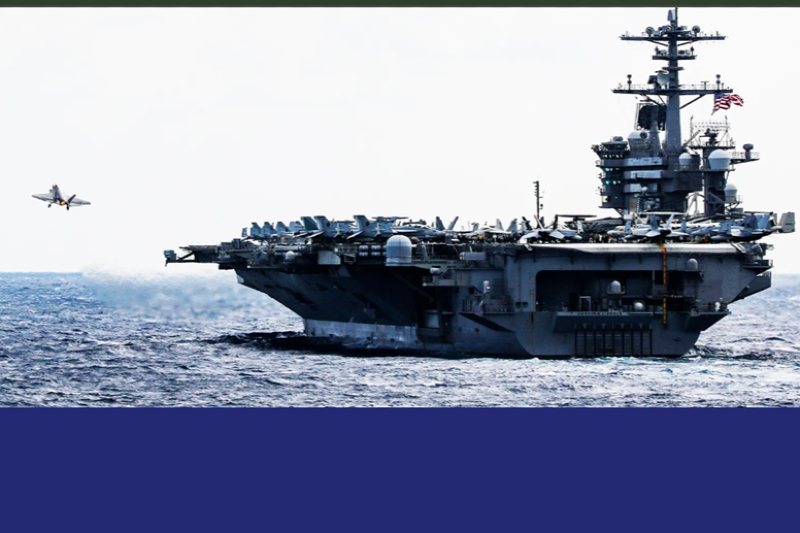
US President Donald Trump has issued a fresh warning to Iran, saying that “time is running out” for Tehran to reach an agreement on its nuclear programme, amid an escalating build-up of American military forces in the Gulf region.
Trump said a powerful US naval force was rapidly approaching Iran, describing it as a “massive Armada” that was “moving quickly, with great power, enthusiasm, and purpose.” His remarks came as Washington continues to reinforce its military posture across the Middle East.
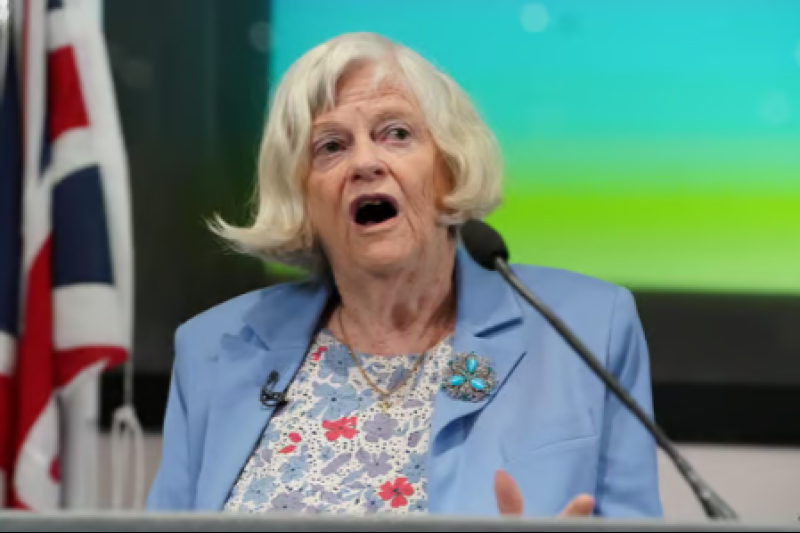
Iran responded sharply to the warning. Foreign Minister Abbas Araghchi said the country’s armed forces were fully prepared to respond to any hostile action, stating they were ready “with their fingers on the trigger” to “immediately and powerfully respond” to aggression on land or at sea.
Tehran has consistently maintained that its nuclear programme is for civilian purposes only and has rejected claims by the US and its allies that it is attempting to develop nuclear weapons.
Trump’s comments followed earlier statements in which he suggested the US would step in to support people facing a violent crackdown during recent demonstrations in Iran. At one point, he told protesters, “Help is on the way,” although he later said he had received assurances that executions of demonstrators had stopped.
According to the US-based Human Rights Activists News Agency (HRANA), more than 6,301 people have been killed since protests erupted late last December, including 5,925 demonstrators. HRANA says it is also examining reports of an additional 17,000 deaths received during a prolonged internet shutdown.
Another monitoring organisation, Iran Human Rights (IHR), based in Norway, has warned that the eventual death toll could exceed 25,000.
Despite these developments, Trump’s most recent remarks appeared focused primarily on Iran’s nuclear ambitions.
“Hopefully Iran will quickly ‘Come to the Table’ and negotiate a fair and equitable deal - NO NUCLEAR WEAPONS,” he wrote on his Truth Social platform.
The US president said the naval deployment to the Gulf exceeded the force previously sent to Venezuela, adding that it was “ready, willing, and able to rapidly fulfil its mission, with speed and violence, if necessary.”
Referring to last June’s US attacks on Iranian nuclear facilities during a brief war between Iran and Israel, Trump warned: “The next attack will be far worse! Don't make that happen again.”
Araghchi responded by reaffirming Tehran’s position on negotiations, saying: “Iran has always welcomed a mutually beneficial, fair and equitable NUCLEAR DEAL—on equal footing, and free from coercion, threats, and intimidation—which ensures Iran's rights to PEACEFUL nuclear technology, and guarantees NO NUCLEAR WEAPONS.
“Such weapons have no place in our security calculations and we have NEVER sought to acquire them,” he added.
Iran’s Deputy Foreign Minister Kazem Gharibabadi said that while messages have been exchanged between Tehran and Washington, there are currently no direct negotiations taking place.
Meanwhile, BBC Verify has tracked a series of recent US military movements using open-source intelligence tools. Satellite imagery shows at least 15 fighter aircraft arriving at Jordan’s Muwaffaq Air Base, while increased aircraft activity has also been observed at bases in Qatar and on Diego Garcia in the Indian Ocean.
FlightRadar24 data has revealed frequent operations by surveillance aircraft, refuelling planes, drones and spy aircraft near Iranian airspace. A US defence official confirmed that a naval task force led by the aircraft carrier USS Abraham Lincoln is operating in waters near Oman.
“In the past two weeks, the US has surged naval and aerial assets to the region, significantly increasing its regional posture,” said Megan Sutcliffe, a principal analyst at risk advisory firm Sibylline.
Satellite images further show that two US guided-missile destroyers and three other combat vessels have been stationed in Bahrain for several months. Iran, for its part, has deployed the IRIS Shahid Bagheri, a drone-carrier warship commissioned last year, off its own coastline.
US and European officials told The New York Times that any future nuclear agreement would require Iran to permanently halt uranium enrichment, restrict its ballistic missile programme, and end support for regional proxy groups including Hamas, Hezbollah and the Houthis.
In October, United Nations sanctions were reimposed on Iran after European powers accused Tehran of escalating its nuclear activities and failing to co-operate with international inspectors overseeing the 2015 nuclear accord.
That agreement—signed by Iran, the US, the UK, France, China, Russia and Germany—limited Iran’s nuclear activities in exchange for sanctions relief. The US withdrew from the deal in 2018 during Trump’s first term, arguing it failed to prevent Iran from pursuing a nuclear weapon.
Following the US withdrawal, Iran began breaching key restrictions under the agreement, particularly those related to uranium enrichment.
The most recent US strikes on Iranian nuclear facilities occurred last June, when the Fordo, Natanz and Isfahan enrichment sites were targeted during an operation known as “Midnight Hammer.” US officials said the strikes significantly delayed Iran’s nuclear capabilities.
However, Hassan Abedini, deputy political director of Iran’s state broadcaster, said Iran “didn't suffer a major blow because the materials had already been taken out” of the facilities.
Iran later launched missiles at a US military base in Qatar in retaliation, an attack Trump dismissed at the time as “very weak” and “expected.”