
Khamenei Killed in Massive US-Israel Air Assault as Iran Vows “Devastating” Retaliation
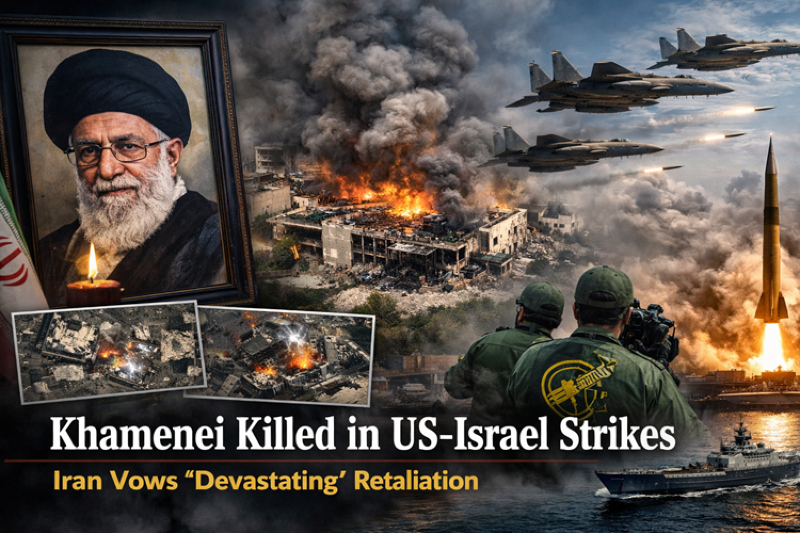
Iran’s Supreme Leader Ayatollah Ali Khamenei has been killed in a sweeping joint military operation carried out by the United States and Israel, according to statements from Washington and confirmation by Iranian state media.
The unprecedented strike marks one of the most dramatic escalations in Middle Eastern geopolitics in decades and has triggered immediate retaliation across the region.
US President Donald Trump announced Khamenei’s death on his Truth Social platform, describing the Iranian leader as “one of the most evil people in history” and declaring the operation a moment of “justice.”
He warned that US air operations would continue “uninterrupted” for as long as necessary to achieve strategic objectives. Israeli Prime Minister Benjamin Netanyahu earlier hinted at “growing signs” that the Iranian leader was “gone” before Tehran formally acknowledged his death.
Compound Hit, Senior Officials Killed
Satellite imagery reviewed by international media showed extensive destruction at the Leadership House compound in Tehran, where Khamenei maintained his official office. Blackened structures, debris fields and smoke plumes were visible following multiple waves of air strikes. Iranian authorities later confirmed that the Supreme Leader was killed early Saturday while at work in his office.
Reports from US media sources suggest dozens of senior Iranian officials may also have died in the coordinated bombardment. Israel had earlier indicated that several high-ranking figures were targeted in what it described as a pre-emptive operation to neutralize threats against the Israeli state.
The Israel Defense Forces (IDF) said around 200 fighter jets participated in what it termed the largest aerial campaign in the history of the Israeli Air Force, striking roughly 500 sites across Iran. Explosions were reported in Tehran, Karaj, Isfahan, Qom and Kermanshah, among other locations.
Civilian Toll and School Strike
Iran’s Red Crescent reported that more than 200 people were killed nationwide, with hundreds injured. Among the most controversial incidents was a strike on a girls’ school in Minab, southern Iran, which local authorities said resulted in more than 100 fatalities. Verified footage circulating online showed severe damage to the school building, located near a base associated with the Islamic Revolutionary Guard Corps.
Panic scenes unfolded in parts of Tehran, where residents queued for fuel and attempted to leave the capital as additional blasts were heard. Streets were quieter than usual, reflecting widespread fear of continued bombardment.
Iran Launches Regional Counterstrikes
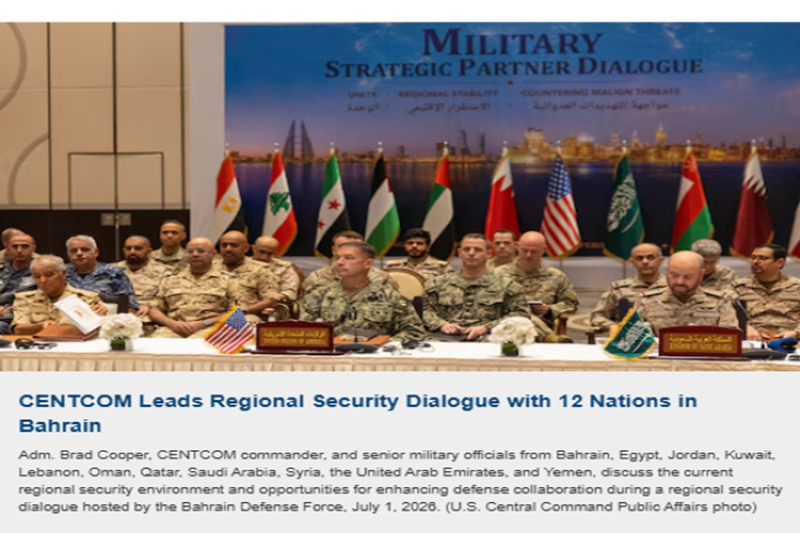
Within hours of confirming Khamenei’s death, Iran launched missile and drone attacks targeting locations across the Middle East. Explosions were reported in countries hosting US military bases or allied with Washington, including Bahrain, Qatar, Kuwait and the United Arab Emirates. A blast was also reported at a hotel in Dubai. Israel confirmed casualties from incoming missile fire near Tel Aviv.
The Islamic Revolutionary Guard Corps (IRGC) issued a statement warning that “the most devastating offensive operation” in Iran’s military history would soon begin against US bases and Israeli targets. Tehran also signaled potential disruption of the strategic Strait of Hormuz, a vital maritime corridor through which roughly one-fifth of the world’s oil and gas supplies transit. Any closure would likely send global energy markets into turmoil.
Diplomatic Fallout and Global Reaction
The strikes come after several rounds of indirect negotiations between Washington and Tehran aimed at curbing Iran’s nuclear activities. Mediators had previously suggested progress was being made toward a possible agreement. However, President Trump expressed dissatisfaction with the pace of talks before authorizing the operation.
Iran’s foreign minister condemned the assault as “illegal and illegitimate,” accusing the US and Israel of launching an unprovoked war. The United Nations secretary-general and multiple world leaders called for restraint, warning that further escalation could destabilize the broader region. The UN Security Council convened an emergency session to address the unfolding crisis.
Meanwhile, the United Kingdom announced it was participating in coordinated regional defensive measures to protect British nationals and partners.
Leadership Vacuum and Constitutional Process
Under Iran’s constitution, the Assembly of Experts — an 88-member clerical body — is responsible for selecting a new Supreme Leader. However, assembling the council under wartime conditions may present logistical and security challenges. In the interim, senior state officials are expected to assume limited responsibilities until a successor is chosen.
State television declared 40 days of national mourning and aired Quranic recitations alongside images of Khamenei, describing his death as the beginning of an “uprising against oppressors.”
A Defining Turning Point
Khamenei, who led Iran for more than three decades, had maintained tight control over the country’s political system and armed forces since succeeding Ayatollah Ruhollah Khomeini in 1989. His death removes a central figure in Iran’s power structure and introduces profound uncertainty about the country’s future direction.
With large-scale air operations ongoing and retaliatory strikes expanding beyond Iran’s borders, the region now stands at a perilous crossroads. Whether this confrontation remains contained or evolves into a broader regional war may depend on the decisions taken in the coming days by Washington, Tehran and their respective allies.
Side Story:
https://thereporter24.com/news/beijing-s-great-wall-of-oil-the-2026-strategic-pivot-after-death-of-iran-s-supreme-leader-khamenei