

‘God of Chaos’ Asteroid Apophis Set for Historic Naked-Eye Flyby in 2029
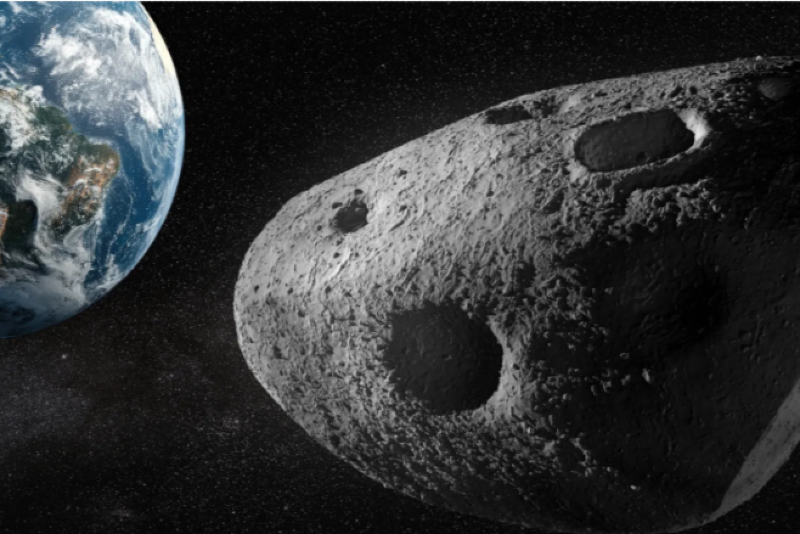
CAPE CANAVERAL, FL — A celestial event of a lifetime is approaching as the infamous asteroid 99942 Apophis prepares for a record-breaking close encounter with Earth.
According to NASA, the space rock—aptly named after the ancient Egyptian deity of darkness and chaos—will be visible to the naked eye during its flyby on April 13, 2029.
A Near-Miss for the Ages
While most asteroids pass Earth at a distance of millions of miles, Apophis is expected to skim our atmosphere at a distance of approximately 20,000 miles. This is nearly 12 times closer than the moon and puts the asteroid significantly nearer to Earth than many high-altitude telecommunications satellites.
The flyby marks one of the closest recorded approaches of an object this size in modern history. Measuring roughly 1,115 feet in diameter—comparable to the height of the Eiffel Tower—the asteroid is large enough that observers in the Eastern Hemisphere will be able to track its movement across the night sky without the aid of telescopes or binoculars.
From Hazard to Opportunity
When Apophis was first identified in 2004, it sent shockwaves through the scientific community. Initial calculations suggested a terrifying possibility of impact in 2029, 2036, or 2068. However, after decades of meticulous tracking using optical and radar data, NASA has officially cleared Earth of any danger.
"There is no risk of Apophis impacting Earth for at least 100 years," NASA scientists confirmed.
While the planet is safe, Earth’s gravity will likely exert a physical toll on the asteroid. Astronomers believe the massive gravitational pull may trigger "asteroid-quakes" or shift the space rock’s orbital path around the sun, potentially changing the length of its "year."
Scientific Missions to the 'Relic'
Apophis is considered a time capsule of the early solar system, composed of 4.6-billion-year-old raw materials that never coalesced into a planet. To capitalize on this rare opportunity, space agencies are preparing dedicated missions:
NASA: Has redirected an existing spacecraft to rendezvous with the asteroid shortly after its closest approach.
ESA: The European Space Agency is launching its own probe to analyze the asteroid’s physical structure and surface weathering caused by cosmic radiation.
Named after Apep (the Greek "Apophis"), the snake-god who sought to swallow the sun, the asteroid provides a unique chance for researchers to study planetary defense and the evolution of our solar system.