
Four Years of Defiance: Europe Pledges Unwavering Support as Ukraine Marks Grim Anniversary
On the fourth anniversary of Russia’s full-scale invasion, the halls of power in Kyiv were filled with European leaders who arrived to deliver a singular message: the West will not retreat.
As Ukraine enters its fifth year of conflict, the milestone was marked by both solemn remembrance of the fallen and a high-stakes diplomatic push to secure the nation’s future.
President Volodymyr Zelenskyy addressed the nation in a poignant video message, asserting that Vladimir Putin has failed to achieve his primary strategic goals.
However, the anniversary also underscored the immense challenges ahead, as peace negotiations continue to stall over the critical issue of territorial integrity.
European Leaders Vow Continued Military and Financial Backing
Top officials, including European Commission President Ursula von der Leyen and NATO Secretary-General Mark Rutte, converged on the capital to reaffirm their commitment.
NATO Chief Mark Rutte emphasized that promises alone cannot win a war, urging member states to accelerate the delivery of ammunition.
"Ukraine needs help today, and every day, until the bloodshed stops," Rutte stated, adding that there can be no true security in Europe without a sovereign and secure Ukraine.
The Human Cost and a Spiraling Economic Crisis
The war’s toll on the ground remains staggering. New estimates from the World Bank and United Nations place the cost of rebuilding Ukraine at a monumental $588 billion over the next decade.
Direct damage to infrastructure—specifically housing, transport, and energy—has reached nearly $195 billion, more than doubling since the initial assessments in 2022.
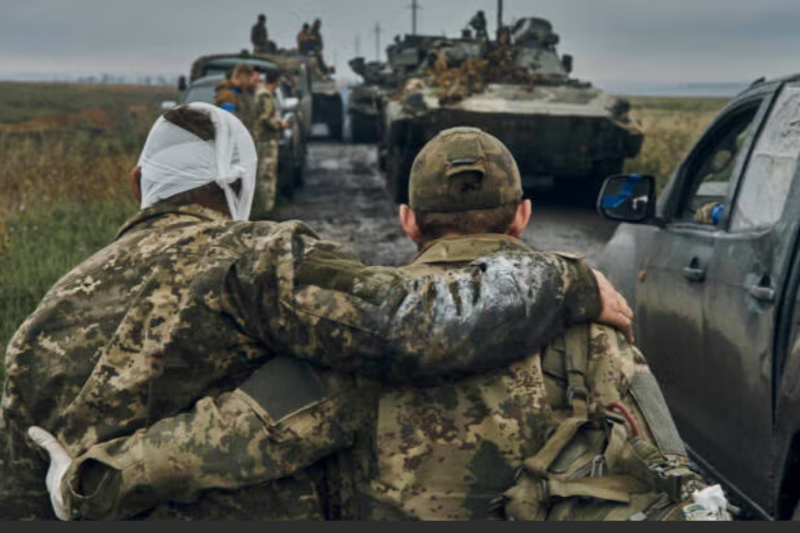
Beyond the physical ruins, a profound mental health crisis is taking hold. In Kyiv, many citizens describe a sense of "numbness," with air raid sirens now part of the daily background noise.
Veterans, particularly those returning as amputees, have expressed fierce opposition to ceding any land to Russia, arguing that such a compromise would betray the sacrifices made by their brothers-in-arms.
Kremlin Defiance and Nuclear Rhetoric
In Moscow, President Vladimir Putin delivered a televised address characterized by defiance and warnings. He accused Ukraine and Western intelligence agencies of attempting to sabotage Russian energy infrastructure and "pushing themselves to the edge."
In a significant escalation of rhetoric, the Russian Foreign Intelligence Service (SVR) alleged—without providing evidence—that Britain and France were planning to secretly transfer nuclear weapons to Kyiv.
The Kremlin reiterated that the "special military operation" would continue until all objectives are met, insisting that any peace settlement must recognize Russia’s claim to occupied territories in the Donbas, Zaporizhia, and Kherson regions.
Economic Strains and Global Sanctions
Four years of conflict have fundamentally reshaped the Russian economy. While military production has surged, the civilian sector is buckling under the weight of Western sanctions. Reports from Moscow indicate soaring food prices, rising inflation, and a growing budget deficit as energy revenues hit a five-year low.
In a move to further cripple Moscow’s war chest, the United Kingdom announced its largest sanctions package to date, targeting the oil pipeline giant Transneft and nearly 300 other entities.
Despite these pressures, Russian analysts suggest the leadership remains committed to a long-term war of attrition, banking on its ability to withstand international isolation.
The Road to Peace: Obstacles and Negotiations
The prospect of a ceasefire remains clouded by deep divisions. French President Emmanuel Macron expressed skepticism regarding a "short-term peace," citing a lack of willingness from the Russian side to engage in genuine diplomacy.
The primary sticking point remains Ukraine’s eastern region of Donetsk. While Russia demands the recognition of its territorial gains, Volodymyr Zelenskyy’s administration maintains that independence and territorial integrity are non-negotiable.
"We want peace—strong, dignified, and lasting," Zelenskyy told his people. "But the agreement must be accepted by Ukrainians, not just signed."
As the fifth year of war begins, the conflict has evolved into a global confrontation between the vision of a "rules-based order" and the Kremlin’s insistence on a spheres-of-influence security model.