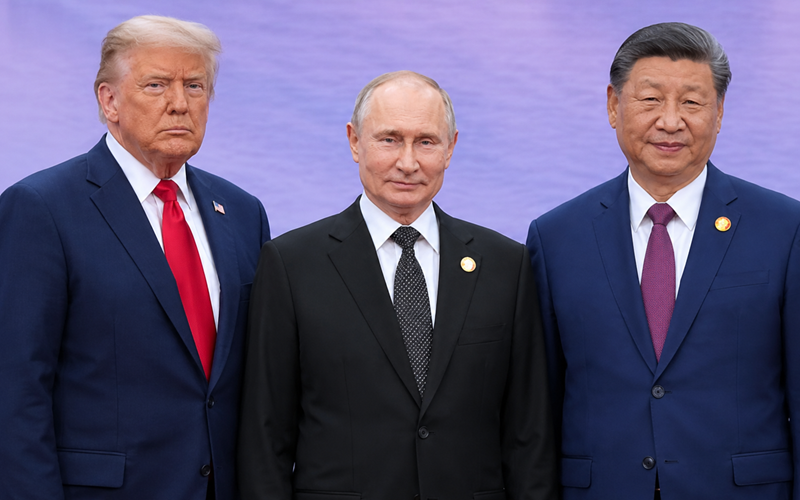
SHENZHEN, China, November 18, 2026: The leaders of the United States, China and Russia are preparing for an unprecedented three-way summit in Shenzhen, with the war in Ukraine, global security, economic rivalry and emerging technologies expected to feature prominently in discussions that could influence the international political landscape.
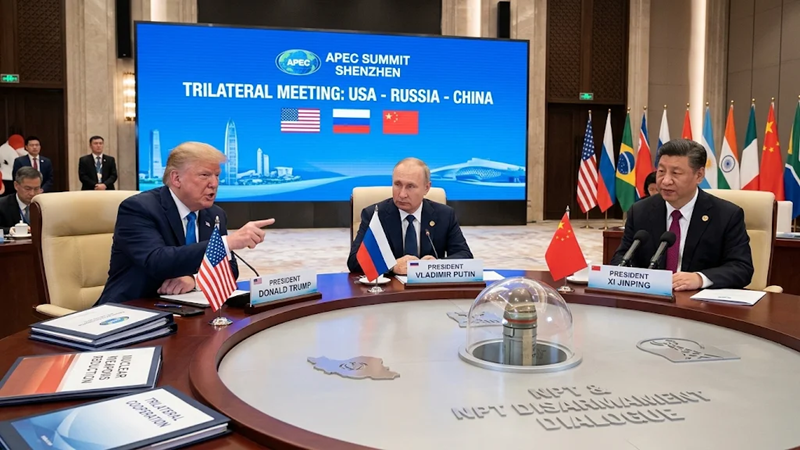
US President Donald Trump, Chinese President Xi Jinping and Russian President Vladimir Putin are scheduled to meet on Thursday on the sidelines of the Asia-Pacific Economic Cooperation (APEC) forum, marking their first joint in-person discussions.
The gathering brings together the leaders of three major powers at a time of heightened geopolitical uncertainty, with particular attention focused on whether they can find common ground on the Ukraine conflict and broader strategic challenges.
Ukraine War Casts Shadow Over Historic Meeting
The potential discussion of Ukraine has emerged as one of the summit's most sensitive issues.
Ukrainian President Volodymyr Zelensky has expressed concern that decisions affecting his country's future could be discussed without representatives from Ukraine or European governments participating.
Trump and Putin are also expected to hold separate bilateral talks on Thursday, potentially providing another opportunity to address the conflict.
The two presidents last met in person in Alaska in August 2025, but those discussions failed to produce a decisive breakthrough toward ending the war.
Whether the Shenzhen summit can generate meaningful diplomatic progress remains uncertain.
China has publicly advocated dialogue and international stability while maintaining its stated neutrality regarding Russia's invasion of Ukraine.
However, Kyiv and its Western partners have repeatedly questioned Beijing's position, alleging that Chinese exports of dual-use technology have supported Russia's military capabilities. China rejects allegations that it is assisting Moscow's war effort.
Nuclear Security, Iran and Artificial Intelligence on the Radar
Although the three governments have not released a comprehensive agenda, discussions could extend well beyond Ukraine.
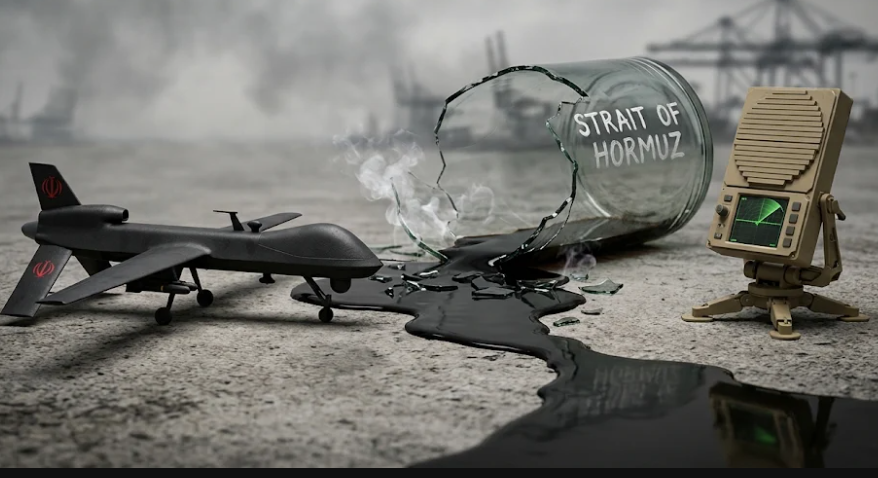
Nuclear proliferation, the conflict involving Iran, international trade disputes and competition over artificial intelligence are among the issues identified as possible subjects for Thursday's meeting.
The talks could also provide an opportunity for the leaders to explore mechanisms for managing strategic disagreements and preventing further deterioration in relations among major powers.
Kremlin spokesman Dmitry Peskov indicated that approximately one hour had been reserved for the trilateral discussions.
The limited timeframe suggests that the meeting may focus on broad strategic positions rather than detailed negotiations on individual disputes.
Xi Seeks Stable Relations With Washington
Trump arrived in Shenzhen on Wednesday to an elaborate official welcome hosted by Xi.
The Chinese president personally received his American counterpart at the airport, where a red carpet, military honours, ceremonial performances and a flyover formed part of the reception.
According to China's state news agency Xinhua, Xi expressed his intention to develop a constructive and stable relationship with Washington based on mutual respect, fairness and equality.
The reception reflected an effort to establish a positive diplomatic atmosphere before discussions on issues that continue to divide the two countries.
Despite recent attempts to improve relations, Washington and Beijing remain at odds over technology, trade and national security.
Those tensions have been sharpened by allegations involving a woman suspected by US intelligence of spying for Beijing and her reported relationship with former Nvidia chief executive Jensen Huang. China has dismissed the espionage allegations as a smear.
Russia and China Reinforce Strategic Partnership
Putin arrived in Shenzhen ahead of Trump and held approximately two hours of talks with Xi on Wednesday.
The meeting highlighted the increasingly close relationship between Moscow and Beijing, particularly in economic cooperation and defence-related matters.
Xi reportedly characterised bilateral relations as exceptionally resilient and expressed confidence that cooperation between the two countries would continue despite international pressures.
The strengthening of China-Russia ties remains an important consideration for Washington as it seeks to manage competition with Beijing while pursuing diplomatic engagement with Moscow.
Diplomatic Encounters Ahead of Formal Negotiations
Wednesday's arrivals also brought Trump and Putin face to face for the first time in more than a year.
The two leaders exchanged greetings before an official reception, although the Kremlin emphasised that no substantive negotiations had taken place.
Trump and Xi also exchanged a warm welcome at the airport, signalling a willingness to maintain direct engagement despite their countries' differences.
The ceremonial encounters set the stage for Thursday's discussions, but the significance of the summit will ultimately depend on whether the leaders can translate diplomatic contact into concrete understandings.
A Test of Great-Power Diplomacy
The Shenzhen meeting represents a rare opportunity for Washington, Beijing and Moscow to address several overlapping international crises in a single diplomatic setting.
For Trump, the summit offers an opportunity to pursue negotiations with both major strategic competitors. For Xi, it reinforces China's role as a central participant in global diplomacy. For Putin, it provides another high-profile international platform amid Russia's continuing confrontation with Ukraine and Western governments.
Yet major questions remain over the prospects for meaningful agreements, particularly on Ukraine, where the interests of the participating countries do not necessarily align.
With the three leaders preparing to enter formal talks, international attention is shifting from the symbolism of their reception to the decisions that could emerge from the negotiating table.
The outcome may offer an early indication of whether the world's three major powers can narrow their differences on war, security and economic competition—or whether their rivalries will continue to shape an increasingly divided international order.