
US-Iran Talks Begin Amid Military Tensions and Nuclear Negotiations
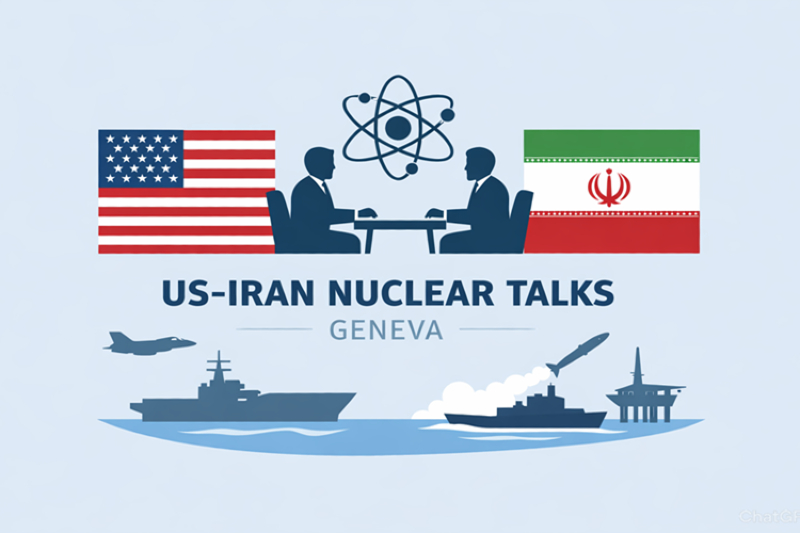
Diplomatic efforts between the United States and Iran are underway today (Tuesday) in Geneva, as both sides seek to address Iran’s nuclear program and broader regional security concerns.
The talks come amid a growing US military presence in the Middle East and heightened tensions following recent unrest and military exercises in Iran.
IAEA Access and Nuclear Program
The International Atomic Energy Agency (IAEA) has been pressing for access to Iran’s main nuclear facilities, which were damaged during a 12-day conflict involving strikes by the US and Israel last June. Tehran has said that inspecting sites containing highly enriched uranium requires strict safety protocols due to potential radiation risks.
Iranian Foreign Ministry spokesman Esmaeil Baghaei told state media that the US has adopted a “more realistic” position on Iran’s nuclear program, and emphasized that the IAEA will play “an important role” in the talks.
However, Baghaei also criticized IAEA Director Rafael Grossi for not condemning previous military strikes on Iranian nuclear sites protected under the Nuclear Non-Proliferation Treaty (NPT).
Experts suggest that the core compromise under discussion could involve reducing enriched uranium levels and granting full transparency to nuclear inspections, though Iran has reiterated that it will not accept demands for zero enrichment and considers its missile program non-negotiable.
US officials, including Secretary of State Marco Rubio, have warned that reaching a deal with Tehran will be challenging due to the influence of hardline clerics, but acknowledged the diplomatic window remains open.
US Military Build-Up
The United States has increased its military presence in the region, deploying aircraft carriers, fighter jets, and support vessels as a show of force. Satellite imagery confirms the location of the USS Abraham Lincoln off the coast of Oman, along with other destroyers and specialized combat ships.
The build-up is intended as a deterrent and demonstrates the US ability to sustain operations if needed. Military intelligence experts note that the current deployment is more extensive and sustainable than previous operations, including strikes in Venezuela and Iran’s nuclear sites in 2025.
Iran’s Military Response
In response to US movements, Iran’s Islamic Revolutionary Guard Corps (IRGC) began a series of naval exercises in the Strait of Hormuz, a vital global oil transit route. The drills, called “Smart Control of the Strait of Hormuz,” tested the readiness of Iranian naval units and included missile launches from vessels under the observation of IRGC leadership.
Hardliners in Tehran have voiced concern over allowing inspections by the IAEA before ensuring Iran’s territorial integrity, the safety of nuclear sites and personnel, and the continued peaceful use of nuclear energy.
Broader Diplomatic Context
The Geneva talks also occur amid discussions on ending the Ukraine war, which is approaching its fourth year since Russia’s full-scale invasion in 2022. Ukrainian President Volodymyr Zelenskyy has said Kyiv faces pressure to make concessions but remains cautious.
Additionally, the diplomatic process comes after a deadly crackdown on protests within Iran earlier this year, which international human rights organizations have condemned, noting that security forces killed thousands of civilians during the unrest. Iranian authorities, however, blame foreign interference for the demonstrations.
Diplomatic and Nuclear Points
Geneva Talks: The second round of US-Iran negotiations is happening today in Geneva.
Technical Preparations: IAEA Director Rafael Mariano Grossi held technical discussions with Iran’s Foreign Minister Ali Bagheri-Araghchi in advance of the talks.
Focus of Talks: Primary focus is Iran’s nuclear program and the potential lifting of US economic sanctions; other regional issues may also be discussed.
IAEA Role: The United Nations nuclear watchdog is expected to play an important role in the negotiations.
Access to Nuclear Sites: Iran’s main nuclear facilities, damaged in strikes by the US and Israel last June, may be inspected, but Tehran requires strict safety protocols due to potential radiation hazards.
Iran’s Position: Iran is willing to decrease the level of enriched uranium and allow inspections, but refuses zero enrichment and considers its missile program a “red line.”
US Position: Washington has moved to a more “realistic” stance, but Secretary of State Marco Rubio warns reaching a deal will be difficult due to hardline decision-making in Tehran.
Iran’s Islamic Revolutionary Guard Corps (IRGC) conducted naval exercises in the Strait of Hormuz on Monday, testing the readiness of its forces amid heightened US-Iran tensions and the ongoing Geneva nuclear talks.
Below is a related TV news report along with the military drill video released by the Iranian government: