
Special Report: Drowning in Negligence: How Systematic Rot Turned a Routine Padma Crossing into a Tragedy
The Price of Negligence: How BIWTA Mismanagement Turned a Routine Crossing into a Padma River Tragedy
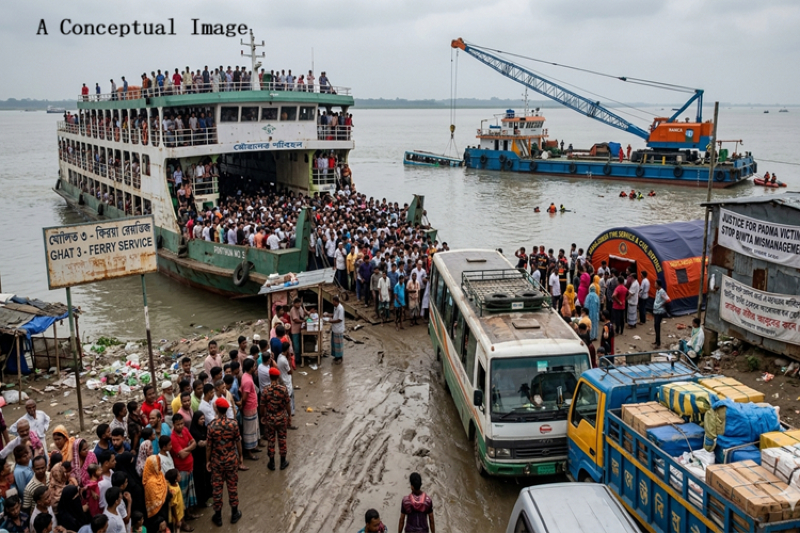
The tragic incident at Daulatdia Ferry Ghat on Wednesday, March 25, 2026, where a passenger bus carrying 40 people plunged into the Padma River, is being framed by authorities as a "weather-related accident." However, a deeper look into the daily operations of the Bangladesh Inland Water Transport Authority (BIWTA) reveals a much darker reality. This was not just an act of nature; it was the inevitable result of systemic corruption, lack of coordination, and a blatant disregard for passenger safety.
The Irony of the "Empty" River
In years past, the Daulatdia-Paturia route was the primary artery for southern and northern districts heading to Dhaka. With the inauguration of the Bangabandhu (Jamuna) Bridge and the iconic Padma Bridge at Mawa, nearly two-thirds of the total vehicular traffic shifted to these fixed crossings.
Logic dictates that with only one-third of the original traffic remaining, the BIWTA should have been able to manage the ferry ghats with military precision. Instead, the situation has regressed. The ghats remain a chaotic hub of long queues, touts, pickpockets, and gamblers. The "unburdened" system has simply become a more efficient machine for exploitation.
Prioritizing "Hard Cash" Over Passenger Buses
One of the most galling aspects of the current mismanagement is the prioritization of individual foot passengers over scheduled buses. While ferries are legally meant to carry buses, cars, and goods-laden trucks, staff members frequently prioritize "extra" passengers who board on foot.
During the recent Eid journeys, witnesses reported thousands of individual passengers—including women with infants—crowding onto ferries, leaving buses stranded on the shore for hours. The motive is simple: unrecorded cash.
"Our bus was kept standing at the ghat while thousands of individual passengers were allowed to swarm the ferry," said Haider Ali, a passenger of Purbasha Paribahan. "By the time the buses finally boarded, the multi-storey ferry was loaded far beyond its safe capacity. The weather was stormy, and we were terrified because the ferry was swinging violently in the wind. The staff were busy collecting money without giving any receipts."
The "Ghat Shuffle": A Deadly Lack of Coordination
Perhaps the most vital cause of the recent bus accident is the total lack of central coordination among the various ferry ghats. Daulatdia features several ghats (Ghat 1, 2, 3, etc.), yet there is no digital board or field official assigned to direct traffic.
When a driver arrives at the river area, they are left to guess which ghat has an incoming ferry. If they go to Ghat 1 and find it empty, they must struggle to turn around and rush to Ghat 2. This creates a "chain impact" of chaos.
Syvro Hossain, a private bank executive, shared his nightmare: "I move in my personal car, and the lack of coordination is acute. I have had to change ghats six or seven times in a single day. Every time I reached a pontoon, I had to backtrack. The roads from the highway to the pontoons are sloped, slippery, and narrow. It is incredibly difficult to make a U-turn while surrounded by other desperate drivers."
This exact scenario led to the March 25 tragedy. The Souhardo Paribahan bus had missed one ferry and was forced to wait on the precarious slope of Pontoon 3. Because there was no official to manage the docking, the utility ferry "Hasna Hena" struck the pontoon with such force that the bus was sent sliding into the water.
The Human Cost of "Flat-Buying" Corruption
While dozens of families are currently mourning the loss of their loved ones—whose dreams were shattered in the dark waters of the Padma—a section of BIWTA officials continues to prosper.
Local reports suggest that many officials, despite having no clear functional role at the ghats, earn massive amounts through "ghat-based" corruption. This money is reportedly used to buy luxury flats in Dhaka and send their children to expensive private medical and engineering colleges.
The Anti-Corruption Commission (ACC) and relevant ministries have long turned a deaf ear to these allegations, allowing a culture of impunity to thrive.
When an accident happens, a "probe committee" is formed, a few lower-level staff are suspended, and the public eventually forgets. The high-level officials remain unpunished, waiting for the next opportunity to exploit the system.
A Pattern of Negligence: Similar Recent Incidents
The Padma tragedy is not a freak occurrence. Only months ago, on December 20, 2025, a similar horror unfolded in Narayanganj. Five vehicles, including a truck and a motorcycle, plunged into the Dhaleshwari River from a ferry. In that instance, the ferry departed while a truck was still in gear and unsecured.
The common thread in both the Narayanganj and Daulatdia incidents is a total failure of "Standard Operating Procedures." Whether it is a truck moving mid-river or a bus being knocked off a pontoon by a docking ferry, the root cause remains the same: The BIWTA is failing to provide a safe, coordinated environment for the public.
A History of Recurring Negligence
The Daulatdia tragedy is not an isolated event but part of a pattern of institutional failure.
Comparison of Recent Ferry Accidents
| Date | Location | Incident | Key Cause |
|---|---|---|---|
| Mar 25, 2026 | Daulatdia, Rajbari | Bus plunges into Padma; 23+ dead | Ferry impact on pontoon; lack of ghat coordination. |
| Dec 20, 2025 | Dhaleshwari, Narayanganj | 5 vehicles (including truck) fall from ferry | Truck shifted in gear mid-river; inadequate securing of vehicles. |
| Feb 3, 2026 | Hatiya Route | Ferry "Mahananda" strands passengers | Irresponsibility of engine master; mismanagement of disembarkation. |
Major Highlights of BIWTA Mismanagement
No Reduction of Suffering Despite Mega-Bridges: Despite the construction of the Jamuna and Padma bridges, which diverted two-thirds of the traffic, the suffering at ferry ghats has not decreased. The BIWTA should now be easily managing the remaining one-third of vehicles, but instead, they maintain "artificial" long queues to keep the demand for bribes high.
Prioritizing Foot Passengers Over Commuter Buses: Although ferries are designed to transport vehicles, management often prioritizes individual foot passengers. During peak times, thousands of people are allowed to swarm the decks, leaving scheduled buses stranded on slippery, dangerous pontoons for hours.
Illegal "Cash-Only" Collections: Ferry staff are frequently seen collecting money directly from individual passengers without issuing any official tickets or receipts. This "off-the-books" income is a primary driver for overloading vessels beyond their safe capacity.
Total Lack of Traffic Guidance: There is no centralized coordination or digital signaling to tell drivers which ghat (1, 2, or 3) to approach. Drivers are forced to play "musical chairs," making dangerous U-turns on narrow, sloped roads, which directly contributed to the bus being in a vulnerable position when hit by the ferry Hasna Hena.
Organized Gambling and Crime on Board: Ferries and launches have reportedly become "heavens" for gamblers, touts, and pickpockets. These illegal activities flourish under the noses of officials, creating an unsafe and undisciplined environment for families and travelers.
"Queue Jumping" for Bribes: While honest drivers wait for hours in long lines, certain vehicles are allowed to supersede the queue and board immediately in exchange for "speed money" or bribes paid to ghat middlemen and corrupt officials.
Safety Negligence on Sloping Pontoons: Pontoons are often slippery and poorly maintained. Without proper barriers or staff to secure waiting vehicles, a single impact from a docking ferry—as seen in yesterday’s accident—is enough to send a 40-passenger bus sliding into the river.
Systemic Corruption and Impunity: A section of BIWTA officials allegedly amasses huge wealth through these "ghat-based" corruptions, buying luxury flats in Dhaka while safety protocols are ignored. The lack of punishment from the Anti-Corruption Commission (ACC) allows this lethal cycle to continue.
Conclusion: No More Excuses
The rescue vessel "Hamza" may eventually pull the bus from the riverbed, but it cannot repair the lives of those who lost their parents, spouses, or children. The "systematic insincerity" of the authorities has turned the Padma crossing into a game of Russian Roulette for commuters.
Unless there is a complete overhaul of the BIWTA management—starting with the implementation of a centralized traffic control system and a crackdown on the "cash-for-boarding" trade—the next tragedy is not a matter of if, but when.
Where the Suffering Still Exists (Highlights)
Artificial "Ghost" Congestion: Even though the Padma Bridge reduced vehicle pressure by 60-70%, the BIWTA has not optimized the remaining capacity. By failing to repair damaged jetties and maintaining steep, dangerous approach roads, they create "artificial" delays. This forces drivers into long, grueling waits, making them more likely to pay "speed money" to jump the queue.
The Dangerous "Slope" Trap: A major source of current suffering is the steepness of the approach roads.
As river levels drop, the pontoons are lowered, making the connecting roads incredibly steep and slippery. Heavy buses and trucks often lose momentum or stall midway, causing massive tailbacks and—as seen in the recent Souhardo Paribahan tragedy—deadly accidents where vehicles slide off the pontoon. Prioritizing "Cash" Over Safety: The "sufferer" is always the law-abiding passenger. Ferry staff continue to prioritize thousands of individual foot passengers who board without tickets (paying cash directly to staff). This fills the ferries beyond capacity and leaves bus passengers sitting in heat or rain on the banks for hours.
Lack of Basic Infrastructure Maintenance: Out of 5 jetties at Paturia, many remain under "temporary arrangements" months after being damaged.
This lack of permanent repair work at Aricha and Paturia, despite the reduced traffic load, shows a blatant disregard for the safety of those who still rely on the river crossing. The "Ghat Shuffle" Chaos: There is still no digital management system. Drivers arrive and must physically hunt for an available ferry across multiple numbered ghats. This lack of guidance turns the riverbank into a chaotic maze where vehicles are constantly backtracking on narrow, unmanaged roads.
Corruption Tax: The suffering is compounded by a powerful "corruption syndicate."
From wharf lease irregularities to fuel oil contracting scams, the money that should go into making the ghats safe and efficient is instead diverted, leaving passengers to navigate a lawless and dangerous environment.
BIWTA builds the stage, but BIWTC runs the show.The Breakdown: BIWTA vs. BIWTC
Agency Full Name Primary Role in Ferry Operations BIWTA Authority Infrastructure & Regulation: They manage the "Ghat" (the land, the sloping roads, the pontoons, and the river navigability/dredging). They are the "landlords." BIWTC Corporation Operations: They own and operate the actual Ferries (vessels like the Hasna Hena or Hamza). They are the "carriers."