

Part 4 – The Man Who Claimed the Throne
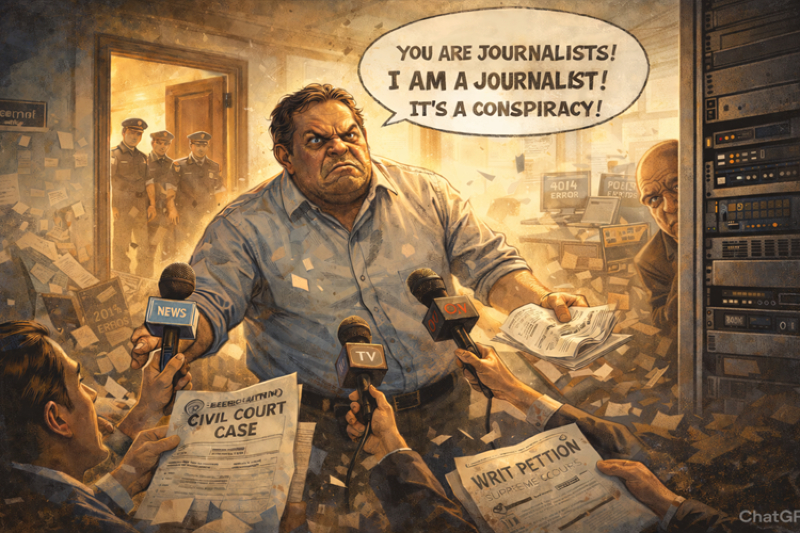
When subtlety failed, Mankin Devil chose spectacle.
If influence through competence was impossible, he would seize attention through chaos. Rumors began to spread: the office, the newsroom, the very portal they all depended on—it wasn’t under anyone’s true control. Ownership, he hinted, was uncertain. Authority was fragile. The words traveled like wildfire.
By midday, the Chairman and Managing Director arrived. They came expecting explanation, not confrontation.
The newsroom held its breath. Mankin, in his office, waited. And when they entered, all civility unraveled.
“What is this about the portal? About ownership?” demanded the Chairman, steady but wary.
“And why is everything in chaos?” asked the Managing Director, hands gripping the glass partition for balance.
Mankin rose, chest heaving, eyes blazing. The calm mask he once wore now seemed brittle. He accused, deflected, and shouted, each word a flare of defiance. Then, with shocking decisiveness, he forced them out of his office. The Managing Director stumbled, the Chairman ducked behind a server rack, only a small fraction of his face peeking out as he watched the scene unfold. Papers tumbled, cables tangled, monitors flashed like warning lights. The newsroom felt less like a workplace and more like a theater of madness.
The police arrived within the hour. Recognition flickered on one officer’s face. “You,” he said. “Another complaint has been filed against you.”
The newsroom went silent.
The allegation was grim: a patient’s mother had died following Mankin’s improper treatments. It seemed he had collected medical prescriptions, summarized them, and offered guidance—without formal training. The mismanaged treatments had caused the woman’s condition to deteriorate.
Reporters raised their cameras, pens poised. Mankin lifted his chin and spoke, voice polished, controlled, theatrical.
“You are journalists,” he declared. “I am a journalist. This is a plot against me, orchestrated to tarnish my reputation. I am in official trouble with the management. Certain quarters want to make me a scapegoat.”
The legal battle escalated. The owners filed an ownership case in civil court. Mankin responded with a writ petition to the Supreme Court, challenging their legitimacy and seeking a stay.
On the courthouse steps, he performed his soliloquy for the world—or perhaps only for himself.
“I have moved to the superior court,” he proclaimed, arms wide, eyes gleaming. “Who dares intervene? I will turn the world upside down. I will right the wrong, wrong the right. I will win this fight. I will occupy the office, and from the rooftop, I will fly my kite!”
Pedestrians paused. Some laughed; some stared.
“I will not retreat to idle parks,” he continued. “I will appoint a clerk, and the work will follow me.”
The scene was absurd, almost Shakespearean in its intensity. The man who once ruled through intimidation now ruled through spectacle and rumor.
Meanwhile, Hansen remained far away, immersed in code and logic, unbothered by the chaos.
The storm had shifted sides. The detour was loud, flamboyant, and chaotic—but it was only a side current in a much larger tide.
The main story had not ended. It had only paused.
▶ Read part 5 https://thereporter24.com/news/part-5-contempt-of-court-the-shaking-of-the-pillars