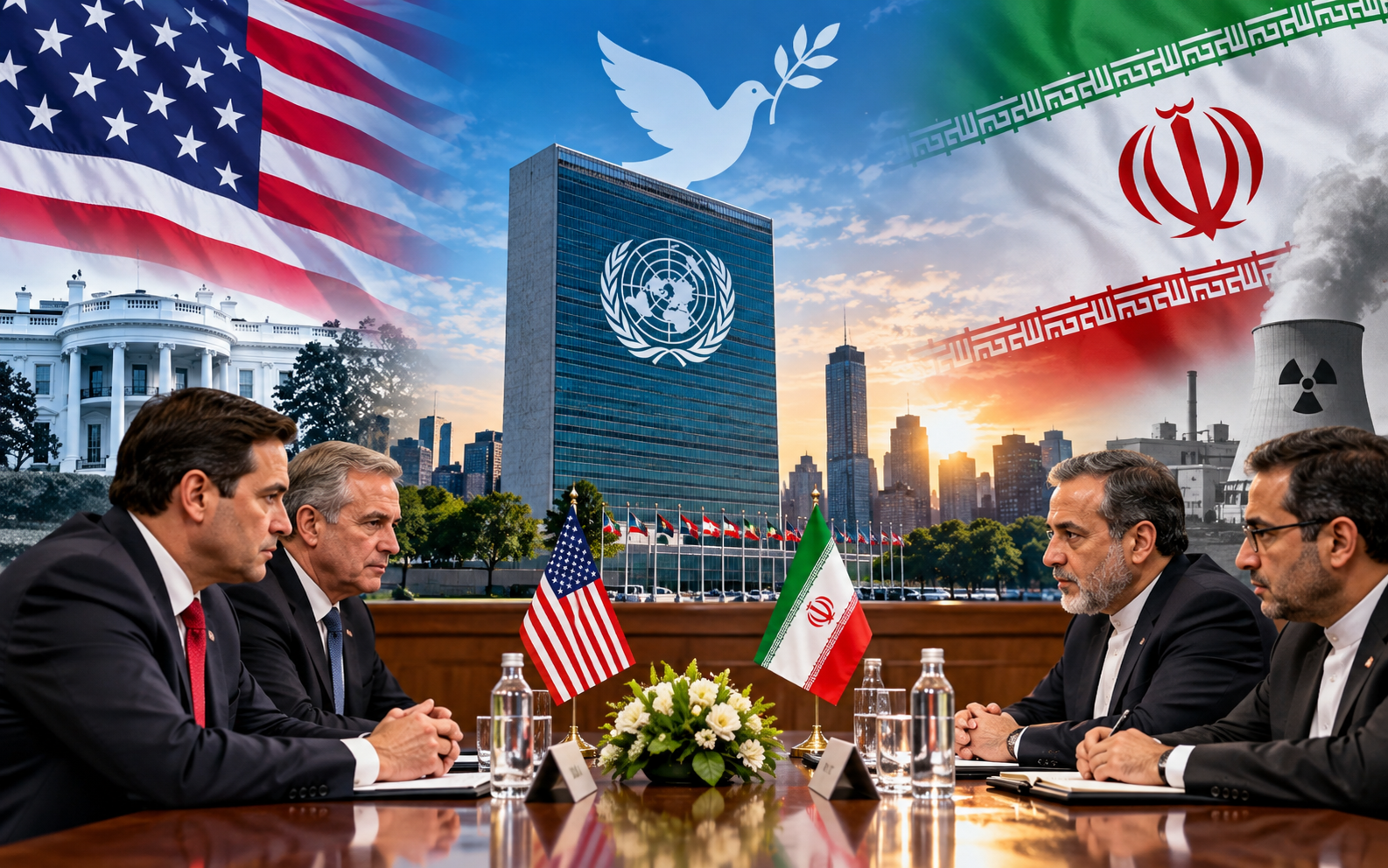
NEW YORK — The United States and Iran have held their first talks since a ceasefire collapsed in June, opening a new diplomatic channel after months of intermittent fighting and escalating threats between Washington and Tehran.
The discussions took place on the sidelines of the United Nations General Assembly in New York, shortly after US President Donald Trump delivered a strongly worded address in which he raised the prospect of further military action against Iran if diplomatic efforts failed.
Trump said his envoys, Steve Witkoff and Jared Kushner, were involved in discussions with Iranian representatives.
According to accounts of the talks, mediators moved between the American and Iranian sides during the negotiations rather than the two delegations conducting all discussions face to face.
The diplomatic contact represents a significant development after direct negotiations between the two countries stalled following the breakdown of the June ceasefire. Since then, the United States and Iran have continued to exchange attacks intermittently, including strikes involving ships and oil tankers in and around the Gulf.
Speaking after the latest discussions, Trump said negotiations with Iran were continuing and expressed optimism that an eventual settlement could be reached.
However, he reiterated Washington's position that Iran must not acquire a nuclear weapon.
US Secretary of State Marco Rubio also said Washington remained open to further engagement with Iranian officials during the UN gathering, although he had earlier said no formal meeting had been scheduled. Rubio said any negotiations would need to contribute meaningfully towards resolving the dispute over Iran's nuclear programme.
The diplomatic activity came against a backdrop of unusually severe rhetoric. During his UN address, Trump warned Iran of potentially devastating consequences if the confrontation continued, while also suggesting that he faced a choice between pursuing an agreement and taking further military action.
Despite those threats, subsequent comments from the US president indicated that negotiations had made enough progress for Washington to remain engaged.
Trump said talks were continuing and described the renewed communication as a potentially important development.
Iranian officials have also signalled an interest in diplomacy. Tehran has sought relief from US economic and military pressure while discussions have included the conflict, sanctions and restrictions affecting the Strait of Hormuz, one of the world's most important routes for oil shipments.
Relations between Washington and Tehran have deteriorated sharply during the months-long conflict.
The fighting has affected neighbouring countries, disrupted energy markets and increased concerns about security across the Gulf and the wider Middle East.
The United States had earlier granted visas to a core Iranian delegation, including President Masoud Pezeshkian and Foreign Minister Abbas Araghchi, enabling them to attend the UN General Assembly in New York. Washington nevertheless imposed travel restrictions on the delegation.
Whether the latest discussions will produce a broader agreement remains uncertain.
But the resumption of US-Iran diplomatic contact marks the first such negotiations since June and comes at a time when both sides are simultaneously maintaining military pressure and exploring a possible negotiated settlement.