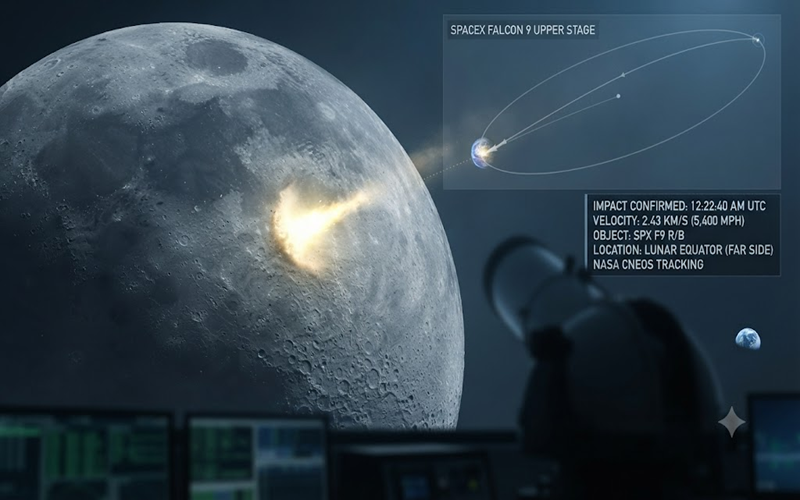
WASHINGTON, D.C. —The Moon is bracing for a high-speed collision with an abandoned piece of space hardware, as an upper-stage component from a SpaceX Falcon 9 rocket hurtles toward the lunar surface at roughly 5,400 miles per hour (2.43 kilometers per second).
Trajectory and Impact Timeline
According to NASA's Center for Near-Earth Object Studies (CNEOS), the impact is projected to occur on Wednesday, following trajectory calculations initially uncovered by independent astronomers tracking public data from a Falcon 9 launch that took place in January 2025.
Zero Risk to Earth and Scientific Opportunity
While the lunar impact marks another artificial addition to a surface already scarred by centuries of asteroid and meteor strikes—alongside previous human-made probes and landers—space agencies have confirmed there is zero threat to Earth.
"There is no danger to Earth," said NASA spokesperson Jimi Russell. "NASA will continue to track the booster for training purposes, as well as later observe the impact site for scientific purposes."
Researchers plan to utilize the event as an opportunistic scientific study, monitoring the aftermath to analyze crater formation and subsurface material exposed by the high-velocity impact.