

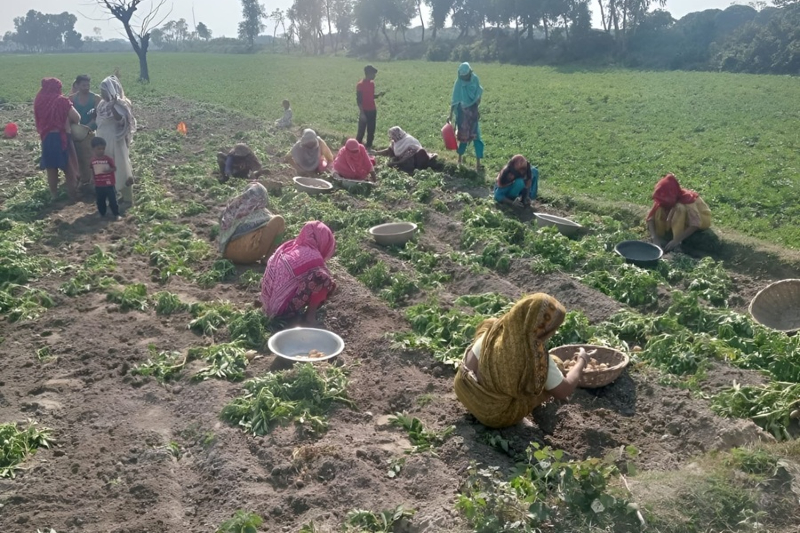
Potato farmers in Dinajpur are facing severe financial losses this season as falling market prices and rising production costs push thousands into distress.
From the start of cultivation, plant diseases, high input costs, and an unexpected price slump have combined to cause losses estimated between Tk 20,000 and Tk 30,000 per bigha, prompting urgent calls for government intervention.
Along the banks of the Punarbhaba River near Dinajpur town lies Ulipur, a locality widely known as a major vegetable-producing area for Dinajpur Sadar.
In these fields stands nearly 70-year-old farmer Abdul Majid Molla, who has spent most of his life cultivating the land. This season, he grew potatoes on two bighas of land, investing around Tk 130,000 on seeds, fertilizers, pesticides, and labour.
Despite satisfactory production, Majid is now staring at heavy losses as potato prices have dropped sharply to Tk 15–16 per kilogram. According to his calculation, the loss amounts to nearly Tk 30,000 per bigha.
“Wholesalers are reluctant to buy potatoes, and even when they do, payments are delayed for days,” Majid said. “Potatoes have become almost worthless—some are even being used as cattle feed.”
His situation reflects a broader crisis across Dinajpur’s 13 upazilas, where thousands of farmers are experiencing similar losses. In Biral upazila’s Rani Pukur Union, farmer Md. Mosharraf Hossain said he lost nearly Tk 50,000 from potato cultivation last year and fears a repeat this season.
“We are facing the same situation year after year, yet there is no effective action from the authorities,” he said. “It feels like no one is listening to the farmers’ suffering.”
According to Biral Upazila Agriculture Officer Rumman Akhtar, potatoes of the Cardinal, Courage, and Sunshine varieties have been cultivated on nearly 9,000 hectares across the upazila’s 12 unions this season. While overall production has been good, the early decline in market prices has left farmers frustrated and discouraged.
“If farmers continue to face losses, they may gradually lose interest in potato cultivation,” Akhtar warned, adding that timely policy support is crucial to ensure fair prices.
At the district level, Mohammad Anisuzzaman, Additional Deputy Director (Crops) of the Department of Agricultural Extension (DAE) in Dinajpur, said potatoes have been cultivated on approximately 48,000 hectares across the district this year, with a production target of around 2.35 million metric tons. Harvesting has already been completed on nearly 1,000 hectares.
However, he acknowledged that the early downward trend in prices has significantly affected farmers’ morale.
He said initiatives are underway to expand cold storage capacity and explore export opportunities, but stressed that addressing the current crisis requires coordinated action from multiple ministries.
“We must protect agriculture and safeguard farmers,” Anisuzzaman said. “If this situation continues, it will weaken the very foundation of the agricultural sector.”
As potato harvests continue across Dinajpur, farmers fear that without immediate price support and market intervention, this staple crop—produced through relentless labour—will only deepen their debt and despair instead of securing their livelihoods.
আলুর দরপতনে বিপর্যস্ত দিনাজপুরের কৃষকরা, বাড়ছে লোকসান
দিনাজপুরে আলুর বাজারদর হঠাৎ কমে যাওয়ায় এবং উৎপাদন খরচ বেড়ে যাওয়ায় চরম আর্থিক সংকটে পড়েছেন হাজারো কৃষক। মৌসুমের শুরু থেকেই রোগবালাই, সার–বীজ ও শ্রমের বাড়তি খরচ এবং শেষ পর্যন্ত বাজারে আলুর দাম ধসে পড়ায় প্রতি বিঘায় কৃষকদের লোকসান হচ্ছে ২০ থেকে ৩০ হাজার টাকা পর্যন্ত। এই পরিস্থিতিতে দ্রুত সরকারি হস্তক্ষেপের দাবি জানিয়েছেন চাষিরা।
দিনাজপুর শহরের পাশ দিয়ে বয়ে যাওয়া পুনর্ভবা নদীর তীরে অবস্থিত উলিপুর এলাকা জেলার অন্যতম সবজি উৎপাদন কেন্দ্র হিসেবে পরিচিত। এখানকার জমিতেই কাজ করছেন প্রায় ৭০ বছর বয়সী কৃষক আবদুল মজিদ মোল্লা। জীবনের অধিকাংশ সময় কৃষিকাজে কাটানো এই কৃষক চলতি মৌসুমে দুই বিঘা জমিতে আলু চাষ করেন।
তিনি জানান, সার, বীজ, কীটনাশক ও শ্রমিকের খরচ বেড়ে যাওয়ায় তাঁর মোট বিনিয়োগ দাঁড়িয়েছে প্রায় ১ লাখ ৩০ হাজার টাকা। অথচ বর্তমানে বাজারে আলুর কেজিপ্রতি দাম মাত্র ১৫ থেকে ১৬ টাকা। এতে করে প্রতি বিঘায় তাঁর লোকসান হচ্ছে প্রায় ৩০ হাজার টাকা।
আবদুল মজিদ বলেন, “পাইকাররা আলু কিনতে চায় না। কেউ কিনলেও টাকা দেয় দেরিতে। আলুর এখন আর কোনো দাম নেই—অনেক জায়গায় গরুর খাবার হিসেবেও ব্যবহার হচ্ছে।”
এই সংকট শুধু উলিপুরেই সীমাবদ্ধ নয়। দিনাজপুর জেলার ১৩টি উপজেলাজুড়েই একই চিত্র দেখা যাচ্ছে। বিরল উপজেলার রানীপুকুর ইউনিয়নের কৃষক মো. মোশাররফ হোসেন জানান, গত মৌসুমে আলু চাষ করে তাঁর প্রায় ৫০ হাজার টাকা লোকসান হয়েছিল। এবারও পরিস্থিতি একই রকম।
তিনি বলেন, “প্রতিবছর এমন ক্ষতির মুখে পড়ছি, কিন্তু কার্যকর কোনো উদ্যোগ চোখে পড়ে না। মনে হয় কৃষকদের কথা শোনার কেউ নেই।”
বিরল উপজেলা কৃষি কর্মকর্তা রুম্মান আখতার জানান, চলতি মৌসুমে উপজেলাটির ১২টি ইউনিয়নে প্রায় ৯ হাজার হেক্টর জমিতে কার্ডিনাল, কারেজ ও সানশাইন জাতের আলু চাষ হয়েছে। উৎপাদন ভালো হলেও মৌসুমের শুরুতেই দাম কমে যাওয়ায় কৃষকরা হতাশ হয়ে পড়েছেন।
তিনি বলেন, “ন্যায্য দাম নিশ্চিত করা না গেলে ভবিষ্যতে কৃষকরা আলু চাষে আগ্রহ হারাতে পারেন।”
এদিকে জেলা কৃষি সম্প্রসারণ অধিদপ্তরের (ডিএই) অতিরিক্ত উপপরিচালক (ফসল) মোহাম্মদ আনিসুজ্জামান জানান, চলতি বছর দিনাজপুরের ১৩টি উপজেলায় প্রায় ৪৮ হাজার হেক্টর জমিতে আলু চাষ হয়েছে। উৎপাদন লক্ষ্যমাত্রা নির্ধারণ করা হয়েছে প্রায় ২৩ লাখ ৫০ হাজার মেট্রিক টন। এর মধ্যে প্রায় ১ হাজার হেক্টর জমির আলু ইতোমধ্যে উত্তোলন সম্পন্ন হয়েছে।
তবে বাজারে আলুর দাম দ্রুত কমে যাওয়ায় কৃষকদের মনোবল ভেঙে পড়েছে বলে স্বীকার করেন তিনি। আনিসুজ্জামান বলেন, “কোল্ড স্টোরেজ সুবিধা বাড়ানো এবং রপ্তানির সম্ভাবনা খতিয়ে দেখার চেষ্টা চলছে। তবে এই সংকট মোকাবিলায় একাধিক মন্ত্রণালয়ের সমন্বিত উদ্যোগ প্রয়োজন।”
তিনি আরও বলেন, “কৃষিকে বাঁচাতে হলে কৃষককে বাঁচাতে হবে। তা না হলে কৃষি ব্যবস্থার ভিত্তিই দুর্বল হয়ে পড়বে।”
আলু চাষ এখন দিনাজপুরের কৃষকদের জন্য কান্নার কারণ হয়ে দাঁড়িয়েছে। কঠোর পরিশ্রমে উৎপাদিত এই গুরুত্বপূর্ণ ফসলের ন্যায্য দাম নিশ্চিত না হলে, আলু চাষ কৃষকদের জন্য আশীর্বাদ নয়—বরং ঋণ ও হতাশার নতুন অধ্যায় হয়ে উঠবে বলেই আশঙ্কা সংশ্লিষ্টদের।